
Updated November 2026
Short answer: Patagonia is Argentina’s southernmost and coolest wine region, best known for elegant Pinot Noir, fresh old-vine Malbec and crisp whites. It has two main areas: Neuquén, a modern wine region around San Patricio del Chañar, and Río Negro, the historic Alto Valle, where some vines were planted almost a century ago. Keep reading for the climate, the wines, the wineries worth knowing and how to visit.
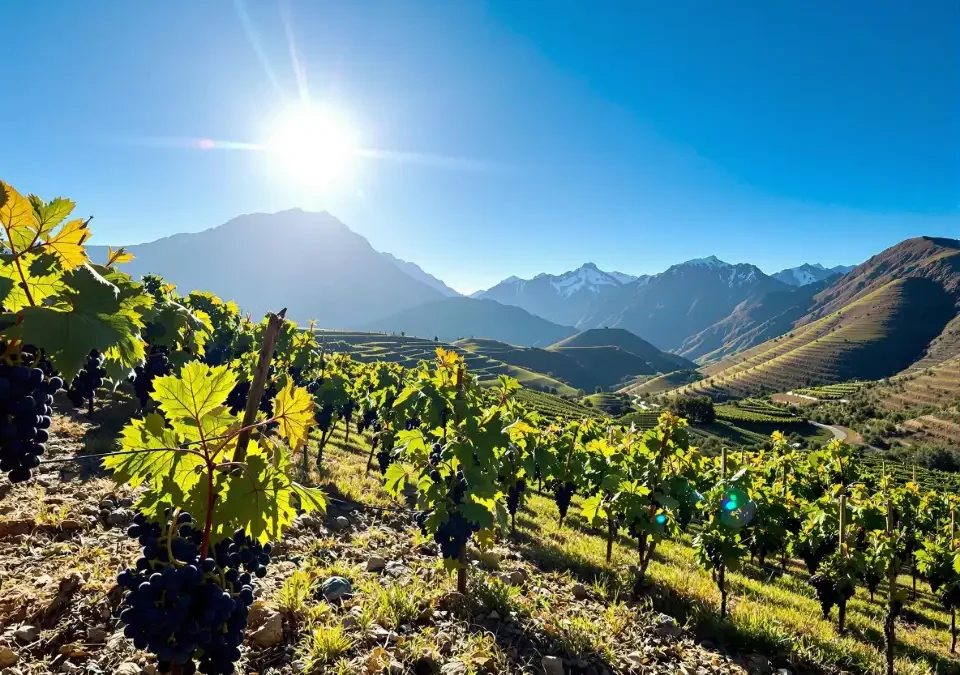
If you only know Argentine wine through Mendoza’s sunny, high-altitude Malbec country, Patagonia will feel like a different wine world. Its vineyards sit far to the south, on a dry, windy steppe, in irrigated river valleys where the desert suddenly turns green.
Why Patagonia is different from Mendoza
Patagonia’s main vineyards sit around 38 to 39 degrees south, about six degrees of latitude below Mendoza, and at much lower elevations: roughly 250 to 450 meters, compared with Mendoza’s 600 to 1,500. Here it is latitude and wind, not altitude, that keep things cool. Rainfall is very low, so vines depend on irrigation from Andean rivers such as the Limay, the Neuquén and the Río Negro. Cool nights, constant wind and the risk of frost favor grapes that ripen early.
| Patagonia | Mendoza | |
|---|---|---|
| Latitude | About 38–39°S | About 33°S |
| Vineyard altitude | Roughly 250–450 m | Roughly 600–1,500 m |
| Climate | Cool, dry and windy desert steppe | Warm, dry and sunny |
| Signature wines | Pinot Noir, old-vine Malbec, Merlot, Sauvignon Blanc, sparkling | Malbec |
| Style | Fresher, more delicate, higher acidity | Riper, fuller, more concentrated |
| Scale | A small fraction of Argentina’s production | Most of Argentina’s wine |
Neuquén: the modern frontier
Neuquén’s wine region is young. Around San Patricio del Chañar, roughly an hour’s drive from the city of Neuquén, an irrigation canal off the Neuquén River turned the steppe into vineyards, and most of today’s plantings date from about 1999 to 2002. The soils are alluvial, and Pinot Noir is the signature grape, alongside Malbec, Merlot, Chardonnay and Sauvignon Blanc.
One of the best-known wineries here is Familia Schroeder, founded in the early 2000s. Its building is cut into a slope so gravity moves the grapes through the winery, and visitors can see the fossil of a dinosaur found on the property while it was being developed.
Río Negro: the historic Alto Valle
The Alto Valle del Río Negro is Patagonia’s oldest wine area. Humberto Canale founded the region’s first commercial winery in 1909, in General Roca, and early 20th-century irrigation canals made farming possible in the desert. For decades apples and pears mattered more than grapes, which turned out to be a blessing: a few very old vineyards survived.
The best-known examples are in Mainqué:
- Bodega Chacra makes Pinot Noir from ungrafted vines planted in 1932 and 1955, farmed organically and biodynamically. It was founded in 2004 by Piero Incisa della Rocchetta, whose grandfather created Sassicaia in Italy.
- Bodega Noemía makes Malbec from ungrafted vines planted in 1932. Compared with Mendoza’s Uco Valley, Río Negro Malbec tends to be more floral and delicate, with softer tannins.
What to drink in Patagonia
- Pinot Noir: the region’s calling card, with red cherry, raspberry and earthy notes and bright acidity. It covers only about 1% of Argentina’s vineyards, but around 11% of Patagonia’s. Our guide to Malbec vs Pinot Noir explains how it differs from Malbec.
- Malbec: fresher and more floral than most Mendoza versions, especially from old vines.
- Merlot: also does well in the cool, dry climate (see Malbec vs Merlot).
- Whites and sparkling: Sauvignon Blanc and Chardonnay keep their freshness, and the natural acidity suits traditional-method sparkling wine.
How to visit Patagonia’s wineries
Wine tourism is still young here, distances are long and many wineries need advance booking, so a private guide makes the trip much easier. Our Patagonia wine tour runs three days from Neuquén: first tastings of Pinot Noir and Merlot with regional cheeses, a full day among the modern wineries of San Patricio del Chañar with a wine-paired lunch, and a day in the Alto Valle of Río Negro with historic family producers. You can extend it with Bariloche and the Lakes, or combine it with Mendoza.
Patagonia wine region: what you need to know
Where is the Patagonia wine region?
In the south of Argentina, mainly in the provinces of Neuquén and Río Negro, with vineyards on the banks of the Limay, Neuquén and Río Negro rivers. It is the country’s southernmost major wine region.
What is Patagonia known for?
Pinot Noir above all, plus old-vine Malbec, Merlot, fresh whites and traditional-method sparkling wine.
Is Patagonian Malbec different from Mendoza Malbec?
Yes. It tends to be fresher, more floral and less tannic, because of the cooler climate and, in Río Negro, the age of the vines.
Can I combine Patagonia with Mendoza?
Yes. Many travelers pair the two to taste Argentina’s warm and cool sides in one trip. Contact us and we will plan it.
Found a Patagonian Pinot Noir you loved? We Ship Wines can send bottles from Argentina to the United States or Brazil. For more Argentine wine, see our private wine tours in Mendoza.